This last week broke me. Not because I lost my mom. But because I’m losing her a little more each day.
There is a unique kind of grief that comes from watching someone disappear, piece by piece, while they’re still sitting right in front of you. It isn’t the grief that comes with a funeral or a final goodbye. It’s quieter than that. It arrives in ordinary moments, and somehow those ordinary moments leave the deepest scars.
A few weeks ago, I installed a camera in Mom’s room. At first, it was simply a way to check on her throughout the day. I never imagined it would become a front-row seat to the progression of dementia. There is no rewind button. No ability to look away. Just the quiet, relentless march of a disease that seems to steal something new every day.
At first, it was the little things. Clothes inside out. Buttons mismatched. Forgotten thoughts here and there. The kinds of moments you convince yourself might just be part of getting older. Now I watch her try to put on a shirt as though it’s a pair of pants. I watch her walk across the room only to stop, staring into space, willing herself to remember why she got there. Sometimes she simply stands there, trapped between intention and memory, waiting for a thought that never comes back.
She still believes she can reach me by walking over to the camera and talking to it as though I’m standing on the other side. She doesn’t understand why I don’t answer immediately. I understand exactly what’s happening, but that doesn’t make it any easier to watch. Every time she looks into that camera, waiting for me to respond, another little piece of my heart breaks.
Last week we also made a decision I never imagined we would have to make. After twenty-seven years, we canceled her cell phone. Not because we wanted to. Because she no longer knew how to use it.
It sounds like such a small thing. A cell phone. But when you’ve walked this road with someone you love, you learn that dementia doesn’t usually announce itself with one catastrophic loss. Instead, it quietly takes ordinary things until one day you realize how much has disappeared.
So, we adapted, because that’s what families do. Now we communicate through the camera in her room and an Echo Dot so I can still drop in to tell her I love her. When dementia enters your life, you stop asking what’s normal. You simply keep finding new ways to stay connected.
As difficult as it has been to watch Mom’s journey, this week changed me for another reason. I wasn’t only watching her. I was watching everything happening around her.
I watched caregivers unintentionally forget to bring her to breakfast. I watched another wake her from a deep sleep and immediately begin giving her several instructions at once, expecting her brain to process them the way it once could. Before she had even fully opened her eyes, I could see confusion settling across her face.
I don’t share those moments to criticize the people caring for our seniors. Quite the opposite.
I believe most people who work in senior care are compassionate people doing incredibly difficult work. Many are understaffed. Many are undertrained. Many are carrying responsibilities that most of us can barely imagine.
But this experience has taught me something I can’t unsee. Good intentions don’t always protect vulnerable people. Advocates do. That realization has changed me, not only as a daughter, but as someone who has spent a career advocating for families as they prepare for the future.
For years, I’ve taught about Social Security, retirement income, taxes, Medicare, and the countless financial decisions that shape life after work. I still believe deeply in that work because financial security matters. It gives people choices. It creates stability. It helps families navigate some of life’s biggest transitions.
But sitting beside my mom through this season has fundamentally changed what I believe it means to prepare for the future.
It has also reminded me that preparing for the future should never cost us the present. I’ve learned to linger a little longer. To sit instead of rushing. To listen, even when the same story comes around again. Because I have a feeling that one day, these ordinary moments will be the ones I treasure most.
I’ve always believed that financial planning was ultimately about people, not numbers. This season hasn’t changed that. It has simply shown me just how much those people will need us long after the financial plan is complete. Because eventually, retirement planning stops being only about retirement. It becomes about life. It becomes about asking different questions.
Who holds the power of attorney?
Who checks in when Mom stops answering the phone?
Who notices when she misses lunch?
Who slows down enough to give one instruction instead of four?
Who becomes her voice when she can no longer advocate for herself?
Those of us who work in financial services are often invited into people’s lives long before a crisis ever arrives. We know their families. We know their fears. We know the people they’re trying to protect. Sometimes we know more about the dynamics inside a family than almost anyone else.
Maybe that means our responsibility is larger than we sometimes realize. Because one day, if we’re fortunate enough to live long enough, many of us will be the person sitting in that room.
We’ll be hoping someone notices. Hoping someone slows down. Hoping someone explains things one step at a time. Hoping someone remembers that behind the diagnosis is a person who spent decades loving, working, raising children, laughing, dreaming, and building a life that deserves to be honored.
A diagnosis should never erase a person’s dignity.
This last week has left me emotionally exhausted. It also reminded me why the work so many of us do matters in ways that extend far beyond budgets, benefit calculations, or retirement income projections.
Retirement planning doesn’t end when someone stops working. Life keeps unfolding. Families keep adapting. Love keeps finding new ways to communicate, even through a camera and an Echo Dot.
And maybe one of the greatest gifts we can give the people we serve is not only helping them build financial security, but encouraging the conversations, the planning, and the advocacy that protect their dignity when they may one day need it most.
Because every person deserves not only a life well lived, but to be seen, heard, and treated with dignity until their very last chapter. Even when they can no longer remember our names, may they never have to wonder if they are loved. ❤️
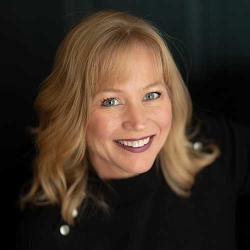
As Founder and President of HLS Retirement Consulting, she partners with forward-thinking advisors nationwide to design strategy-based solutions that help clients grow, protect, and preserve their retirement income. She also serves as Editor-in-Chief of Heather Schreiber’s Social Security Advisor, a nationally distributed monthly newsletter focused on turning complex Social Security rules into strategy-driven, value-creating solutions that help advisors strengthen relationships, retain clients, and drive growth.
Off the clock, Heather is a hiker, humorist, and proud matriarch of a family of six (plus four furry sidekicks). Having recently joined the ranks of America’s 63 million family caregivers, she shares her own caregiving journey through her writing, offering empathy, perspective, and hard-won lessons to others walking a similar path. Her signature blend of technical expertise, human connection, and a touch of sass makes her a trusted voice for advisors guiding clients through life’s most important financial transitions.
Click here to sign up for the Retirement Strategy Report, Heather’s free monthly newsletter for financial professionals.
- The Things Dementia Never Tells You to Prepare For - October 28, 2026
- What Caring for My Mom is Teaching Me About Showing Up - October 28, 2026
- The Things Dementia Takes - October 28, 2026