There is something particularly complicated about becoming a mother to your own mother when, for much of your life, you weren’t entirely sure you had gotten enough of one yourself.
That is not an easy sentence for me to write.
My relationship with my mother has always been complicated. There was love, for sure. But there was also distance, disappointment, and a little girl who spent a lot of years wanting to feel chosen. For much of my mother’s life, romantic love seemed to occupy an enormous amount of space. Sometimes, if I am being truthful, it felt like more space than I did.
And yet years later, when one of those relationships became psychologically, emotionally, financially, and ultimately physically abusive, she came to me. Whatever history existed between us, there was no question in my mind about what mattered in that moment. She needed someone to help her find safety.
So I showed up.
I wish I could tell you that everything that followed was simple. It wasn’t. Dementia has a way of rearranging relationships before you are ready for them to change. Slowly, and then seemingly all at once, the person who once made her own decisions needs someone else to make them. The parent becomes the person who needs protecting. The daughter becomes the advocate, the decision-maker, the worrier, the keeper of details, and sometimes something very close to the mother.
There is grief in that reversal. But there has also been an unexpected clarity.
My mother did not always demand the respect she deserved in her relationships. Maybe she didn’t believe she could. Maybe life taught her to accept less. Maybe there are parts of her story I will never fully understand. I cannot change any of that now.
What I can do is insist that, in this chapter of her life, she is treated with dignity. I can make sure she is safe. I can speak when she cannot find the words. I can ask the questions she no longer knows to ask. I can fight for good care, notice when something isn’t right, protect her resources, hold her hand, and remind the people around her that the woman in front of them is much more than a diagnosis. And perhaps most importantly, I can want more for her than she ever learned to demand for herself.
That doesn’t erase our history. I don’t think love requires us to pretend that painful things never happened, and I don’t think forgiveness means rewriting the past into something prettier than it was. Maybe maturity is learning that two things can be true at the same time.
I can grieve what I needed from my mother and didn’t always receive while fiercely protecting the mother who needs me now. I can still feel the sting of watching how deeply she has valued romantic love throughout her life while respecting the comfort and companionship love gives her today. I can carry hurt without allowing it to determine how I behave.
But I want to be honest about that, too. I didn’t arrive at that understanding gracefully or all at once. For a long time, some of the hurt did dictate how I behaved. I was angry. I kept score. I wanted acknowledgment for things that had hurt me and answers to questions I may never get. It has taken me years to understand that I can honor what happened without allowing it to decide who I am in response to it.
That shift in perspective has changed me. I don’t have to pretend the hurt wasn’t real in order to stop letting it lead. I can acknowledge the little girl who wanted something different from her mother while allowing the woman I am today to choose how I love the mother in front of me.
That may be the lesson I wasn’t expecting from this season of my life.
We talk a lot about “showing up” for people. But showing up when everything is easy isn’t particularly difficult. The real test is how we show up when the relationship is complicated, when there is history, when there are disappointments, when the person in front of us cannot give us what we once hoped they would, and when doing the right thing offers no tidy resolution to what came before.
I think about that often in my work life, too.
Financial professionals often meet people at extraordinarily vulnerable moments. A spouse has died. A diagnosis has changed everything. A parent can no longer live independently. Money is running out. Retirement hasn’t unfolded as the spreadsheet predicted.
Of course, technical knowledge matters tremendously in those moments. The rules matter. The numbers matter. Getting the strategy right matters. But none of those things is the reason I have spent so much of my career working alongside financial professionals to look beyond the calculation.
I believe people deserve to be seen before they are solved.
They deserve someone willing to understand what is actually happening in their lives before deciding what should happen with their money. They deserve to have the question behind the question heard. They deserve someone who notices what they are afraid to say, who recognizes when the technically correct answer may not be the right answer for the human being sitting across the table, and who is willing to advocate for them when life becomes complicated.
That belief is at the heart of why I do the work I do, and why I love it so much.
It is why I care so deeply about moving planning from rules to real life. It is why I focus on the person before the solution, the household before the headline, and the life before the spreadsheet. Because ultimately, planning isn’t about demonstrating how much we know. It is about using what we know in service of another human being.
A daughter caring for her mother and a financial professional caring for a client may look like very different roles. But perhaps the responsibility isn’t entirely different. Sometimes another human being is trusting us with something precious because, for whatever reason, they cannot carry it alone.
And our job is to handle that trust with dignity.
I cannot change what existed between my mother and me before dementia entered our lives. But I can decide what she experiences from me now. I don’t know how much of our history she will ultimately remember. I don’t know how long she will remember that I am her daughter.
But for as long as I am given the privilege of standing beside her, I want her to know, whether she can articulate it or not, that someone is looking out for her. Someone believes she deserves respect. Someone wants more for her. And someone showed up.
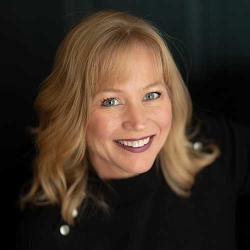
As Founder and President of HLS Retirement Consulting, she partners with forward-thinking advisors nationwide to design strategy-based solutions that help clients grow, protect, and preserve their retirement income. She also serves as Editor-in-Chief of Heather Schreiber’s Social Security Advisor, a nationally distributed monthly newsletter focused on turning complex Social Security rules into strategy-driven, value-creating solutions that help advisors strengthen relationships, retain clients, and drive growth.
Off the clock, Heather is a hiker, humorist, and proud matriarch of a family of six (plus four furry sidekicks). Having recently joined the ranks of America’s 63 million family caregivers, she shares her own caregiving journey through her writing, offering empathy, perspective, and hard-won lessons to others walking a similar path. Her signature blend of technical expertise, human connection, and a touch of sass makes her a trusted voice for advisors guiding clients through life’s most important financial transitions.
Click here to sign up for the Retirement Strategy Report, Heather’s free monthly newsletter for financial professionals.
- The Things Dementia Never Tells You to Prepare For - October 28, 2026
- What Caring for My Mom is Teaching Me About Showing Up - October 28, 2026
- The Things Dementia Takes - October 28, 2026